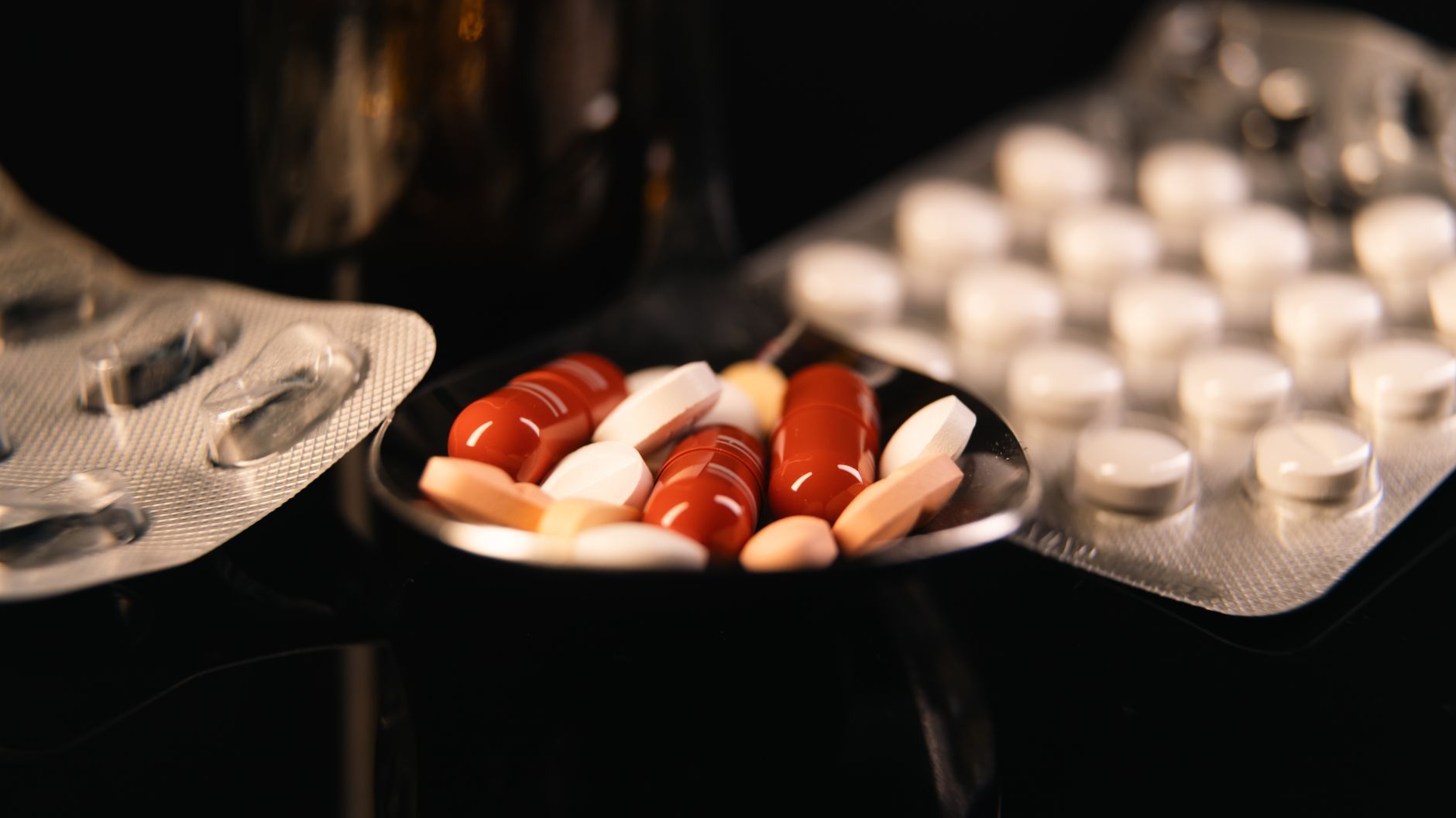
More than 500 medications cause dry mouth: six drug classes drive most cases
More than 500 medications that cause dry mouth have been documented in systematic reviews, but six drug classes account for the majority of clinically significant cases. 2 A 2017 World Workshop on Oral Medicine cataloged medications inducing salivary gland dysfunction across anticholinergics, antidepressants, antihistamines, antihypertensives, antipsychotics, and opioids. The prevalence varies by drug class, dose, and individual susceptibility, but the mechanism is similar: most of these medications interfere with the parasympathetic nervous system’s ability to stimulate saliva production. 3
Polypharmacy multiplies the risk. A national survey of dependent older adults in New Zealand found that those taking five or more medications had significantly higher rates of xerostomia compared to those on fewer drugs, and the effect compounds as additional anticholinergic medications are added. 7 The clinical consequence is not just discomfort. Reduced saliva flow creates an environment where cavity-causing bacteria thrive, swallowing becomes difficult, and taste perception dulls.
The tension: most patients experiencing dry mouth side effects try over-the-counter saliva substitutes first because they require no prescription and no doctor’s visit. The clinical trials show these OTC products underperform compared to prescription salivary stimulants, yet the prescription options remain underutilized. 4
The medications that cause dry mouth most often: antidepressants and antihistamines
A 2018 meta-analysis quantified xerostomia prevalence by medication class in older adults. 1 Antidepressants, particularly tricyclic antidepressants (TCAs) like amitriptyline, ranked among the highest-risk drug classes. Antihistamines, both first-generation (diphenhydramine, chlorpheniramine) and some second-generation formulations, also showed strong associations with dry mouth causes. Antipsychotics, anticholinergics used for overactive bladder, and certain antihypertensives (especially diuretics and some calcium channel blockers) rounded out the high-risk categories.
| Drug Class | Common Examples | Mechanism | Clinical Notes |
|---|---|---|---|
| Anticholinergics | Oxybutynin, tolterodine, benztropine | Direct muscarinic receptor blockade | Highest anticholinergic burden; dose-dependent effect |
| Tricyclic antidepressants | Amitriptyline, nortriptyline, doxepin | Anticholinergic activity | Persistent dry mouth in 30-60% of users; antidepressant dry mouth is a leading cause of discontinuation |
| Antihistamines (1st gen) | Diphenhydramine, chlorpheniramine | Anticholinergic side effect | Effect worse with chronic use; reasons for dry mouth include nighttime formulations |
| Antihypertensives | Hydrochlorothiazide, clonidine, methyldopa | Sympathetic modulation (clonidine, methyldopa) or fluid depletion (diuretics) | Diuretics reduce total body fluid; centrally acting agents affect salivary gland innervation |
| Antipsychotics | Olanzapine, quetiapine, clozapine | Anticholinergic and dopaminergic effects | Clozapine has particularly high anticholinergic burden |
| Opioids | Morphine, oxycodone, tramadol | Mu-opioid receptor effects on glandular secretion | Dose-dependent; chronic use increases severity |
Drug classes ranked by xerostomia risk, based on meta-analysis and World Workshop consensus reviews.
The table shows the anticholinergic mechanism dominates. Medications with anticholinergic properties block muscarinic receptors on salivary gland cells, preventing acetylcholine from triggering saliva secretion. Even drugs not primarily prescribed for their anticholinergic effects (such as many antidepressants and antihistamines) carry this side effect because of their molecular structure.
Why these drugs reduce saliva: the anticholinergic mechanism
Saliva production is controlled by the autonomic nervous system. Parasympathetic stimulation via acetylcholine binding to muscarinic receptors (primarily M3 receptors) on salivary gland cells triggers fluid secretion. Anticholinergic drugs block these receptors, preventing the signal from reaching the gland. The result is immediate and dose-dependent reduction in saliva flow. 2
A second mechanism involves oxidative stress and glandular atrophy. A 2023 systematic review found that chronic exposure to certain medications induces inflammatory changes and structural damage to salivary glands through oxidative pathways. 12 Over time, this can reduce the gland’s capacity to produce saliva even when the drug is discontinued, though the evidence on reversibility is limited.
Diuretics work differently. They reduce total body fluid volume, which secondarily decreases saliva production because less fluid is available for secretion. The dry mouth disease mechanism here is not receptor blockade but systemic dehydration at the tissue level.
Opioids act on mu-opioid receptors present in salivary glands, directly inhibiting secretion independent of anticholinergic pathways. 10 This explains why patients on opioid therapy often experience severe xerostomia that does not respond to typical anticholinergic-targeted interventions.
Dry mouth triples cavity risk and disrupts swallowing, speech, and taste
Saliva is not just for comfort. It buffers acid, delivers calcium and phosphate to remineralize enamel, and mechanically clears food debris and bacteria. When saliva flow drops below a critical threshold, the oral environment shifts toward decay. Patients with chronic medication-induced xerostomia show cavity rates two to three times higher than matched controls with normal salivary flow.
Swallowing becomes effortful. Saliva lubricates the bolus (the mass of chewed food) and initiates the swallow reflex. Without it, patients report difficulty swallowing dry foods, needing frequent sips of water during meals, and in severe cases, aspiration risk increases because the dry bolus does not move smoothly through the pharynx.
Speech clarity suffers. The tongue and palate require a moist surface to articulate consonants cleanly. Chronic dry mouth creates a sticky, tacky feeling that disrupts normal speech mechanics, especially noticeable during extended conversation.
Taste perception dulls. Taste buds require dissolved molecules to activate, and saliva is the solvent. A systematic review on medication-induced xerostomia and orofacial pain found that patients also report altered or diminished taste, which compounds nutritional issues in older adults already at risk for poor intake. 8
Pain is another underrecognized consequence. The same 2023 review identified associations between xerostomia and burning mouth syndrome, oral mucosal pain, and difficulty wearing dentures. 8 The dry tissue is more vulnerable to friction injury and fungal infection (oral candidiasis), which further exacerbates discomfort.
What the trials show works: prescription stimulants, not OTC substitutes
The only interventions with consistent evidence for increasing saliva flow are prescription cholinergic agonists: pilocarpine and cevimeline. Both drugs stimulate muscarinic receptors directly, bypassing the blockade caused by anticholinergic medications.
A head-to-head trial comparing pilocarpine and cevimeline in patients with medication-induced xerostomia found both significantly increased salivary flow compared to baseline, with cevimeline showing a slightly longer duration of effect. 5 The typical dose is pilocarpine 5 mg three times daily or cevimeline 30 mg three times daily. The main side effect is sweating, which occurs because the drugs stimulate muscarinic receptors throughout the body, not just in salivary glands.
A randomized controlled trial of pilocarpine for opioid-induced dry mouth in healthy adults demonstrated a dose-dependent increase in salivary flow, with the 5 mg dose producing measurable improvement in subjective symptoms and objective flow rates. 10 The effect is rapid (onset within 30 to 60 minutes) and temporary (duration 3 to 4 hours), which is why the dosing is three times daily.
In head-to-head trials, prescription salivary stimulants (pilocarpine, cevimeline) significantly outperformed over-the-counter saliva substitutes, yet most patients try the OTC options first because they don’t require a doctor’s visit. The evidence gap: prescription stimulants address the root problem (insufficient glandular output) while OTC substitutes only provide temporary surface moisture.
Natural products have limited evidence. A double-blind, placebo-controlled trial of an herbal lozenge (containing malic acid and xylitol) found modest subjective improvement but no significant change in objective salivary flow measurements compared to placebo. 11 The placebo effect is high in xerostomia trials because any intervention that prompts the patient to focus on their mouth can temporarily stimulate residual saliva production.
Why ‘just drink water’ and sugar-free gum don’t address the problem
The most common advice patients receive is to sip water frequently. Water provides temporary relief by moistening the oral mucosa, but it does not stimulate saliva production, does not buffer acid, and does not deliver the protective proteins and minerals that saliva contains. Within minutes of swallowing, the mouth is dry again.
A randomized controlled trial comparing over-the-counter saliva substitutes (gels, sprays, and lozenges designed to mimic saliva) to a natural sialogogue (citric acid, which stimulates residual salivary gland function) found that the citric acid group reported greater symptom relief than the substitute group, despite the fact that citric acid is acidic and therefore theoretically risks enamel erosion. 9 The finding suggests that even minimal stimulation of the patient’s own saliva production outperforms artificial moisture replacement.
The Cochrane systematic review on topical therapies for dry mouth concluded that the evidence base for saliva substitutes is weak. 6 Most trials were short-term, many were industry-funded, and the effect sizes were modest even in positive trials. The review found no strong evidence that any one OTC product outperformed others, and no evidence that any OTC product approached the efficacy of prescription stimulants.
Sugar-free gum works by mechanical stimulation, which can increase salivary flow in patients who still have residual gland function. The effect is real but temporary (lasts only while chewing) and requires that the salivary glands are capable of responding. In patients on high-dose anticholinergic medications, the glands are pharmacologically blocked and mechanical stimulation produces little to no increase in flow.
Xylitol, a common ingredient in sugar-free gum and lozenges marketed for dry mouth, has anti-cavity properties independent of saliva stimulation, but it does not address the underlying salivary deficit. It is a reasonable adjunct for cavity prevention but not a treatment for xerostomia itself.
When you can’t stop the medication: the evidence on long-term management
Many patients cannot discontinue the medication causing dry mouth because the underlying condition (depression, hypertension, chronic pain, psychosis) requires ongoing treatment. A 2025 umbrella review synthesizing all published systematic reviews on xerostomia management found that the most effective long-term strategy is a combination of prescription salivary stimulants, meticulous oral hygiene, and fluoride supplementation. 4
The World Workshop on Oral Medicine systematic review identified several management principles supported by consistent evidence. 3 First, minimize polypharmacy where possible. If a patient is on multiple anticholinergic medications, work with the prescriber to identify whether any can be reduced or substituted with a lower-anticholinergic alternative. Second, use prescription stimulants (pilocarpine or cevimeline) in patients with residual gland function. Third, intensify preventive care: daily fluoride rinses (0.05% sodium fluoride), fluoride toothpaste (1,450 ppm or higher), and three-month dental recall intervals instead of the standard six months.
Patients with severe xerostomia who cannot tolerate or do not respond to cholinergic agonists require palliative strategies. Frequent sips of water, sugar-free lozenges to stimulate mechanical saliva production, and nighttime use of a humidifier can provide modest symptom relief. Avoid mouth rinses containing alcohol, which further dries the mucosa.
If you are starting a new medication in one of the high-risk classes (antidepressants, antihistamines, anticholinergics, antipsychotics, opioids), ask your prescriber about the anticholinergic burden and whether a lower-risk alternative exists. If dry mouth develops and persists beyond two weeks, request a trial of pilocarpine or cevimeline rather than relying on over-the-counter substitutes that the trials show underperform.
The evidence does not support the claim that dry mouth is a minor inconvenience that resolves on its own. In most cases, the xerostomia persists as long as the medication continues, and in some cases (particularly with prolonged high-dose anticholinergic exposure), salivary gland atrophy may make the condition partially irreversible. Early intervention with prescription stimulants and preventive fluoride reduces the long-term oral health consequences, but the intervention must be sustained.
Sources
- Tan ECK, et al. Medications That Cause Dry Mouth As an Adverse Effect in Older People: A Systematic Review and Metaanalysis. J Am Geriatr Soc, 2018. PubMed
- Wolff A, et al. A Guide to Medications Inducing Salivary Gland Dysfunction, Xerostomia, and Subjective Sialorrhea: A Systematic Review Sponsored by the World Workshop on Oral Medicine VI. Drugs R D, 2017. PubMed
- Villa A, et al. World Workshop on Oral Medicine VI: a systematic review of medication-induced salivary gland dysfunction: prevalence, diagnosis, and treatment. Clin Oral Investig, 2015. PubMed
- Conte DB, et al. Systematic Reviews on the Management of Xerostomia and Hyposalivation-An Umbrella Review. Gerodontology, 2025. PubMed
- Brimhall J, et al. Efficacy of cevimeline vs. pilocarpine in the secretion of saliva: a pilot study. Spec Care Dentist, 2013. PubMed
- Furness S, et al. Interventions for the management of dry mouth: topical therapies. Cochrane Database Syst Rev, 2011. PubMed
- Thomson WM, et al. Xerostomia and polypharmacy among dependent older New Zealanders: a national survey. Age Ageing, 2021. PubMed
- Kohli D, et al. Association between medication-induced xerostomia and orofacial pain: a systematic review. Quintessence Int, 2023. PubMed
- Femiano F, et al. A comparison of salivary substitutes versus a natural sialogogue (citric acid) in patients complaining of dry mouth as an adverse drug reaction: a clinical, randomized controlled study. Oral Surg Oral Med Oral Pathol Oral Radiol Endod, 2011. PubMed
- Götrick B, et al. Oral pilocarpine for treatment of opioid-induced oral dryness in healthy adults. J Dent Res, 2004. PubMed
- Navarro Morante A, et al. Natural products for the management of xerostomia: a randomized, double-blinded, placebo-controlled clinical trial. J Oral Pathol Med, 2017. PubMed
- Ungureanu LB, et al. Atrophy and Inflammatory Changes in Salivary Glands Induced by Oxidative Stress after Exposure to Drugs and Other Chemical Substances: A Systematic Review. Medicina (Kaunas), 2023. PubMed