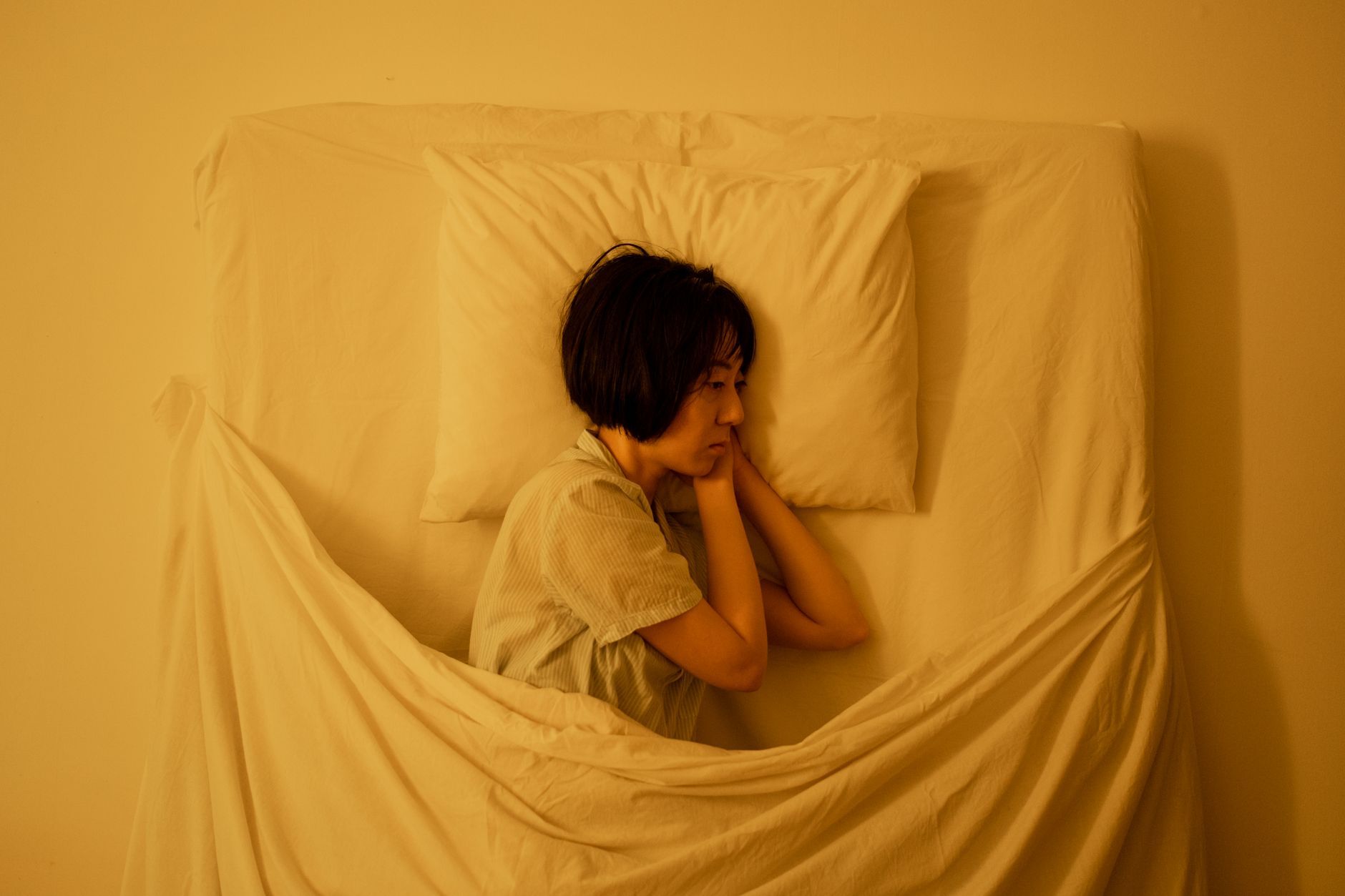
The connection between snoring and mental health is more direct than most people assume. Snoring usually signals obstructive sleep apnea (OSA), a condition in which the airway collapses repeatedly during sleep, fragmenting sleep architecture and reducing oxygen delivery to the brain. Two large meta-analyses found that 35% to 53% of adults with untreated OSA meet diagnostic criteria for clinical depression, a prevalence two to three times higher than the general population.12 The relationship runs in both directions: sleep apnea raises depression risk, and depression worsens apnea severity.
Most consumers who connect snoring to low mood assume the fix is straightforward (buy an anti-snoring device, mood improves). The trial evidence shows a different picture. Continuous positive airway pressure (CPAP), the gold-standard OSA treatment, has inconsistent effects on depression across seven randomized controlled trials. Cognitive behavioral therapy for insomnia (CBT-I), which does not address snoring at all, has clearer and stronger evidence for improving mental health outcomes.18
This review synthesizes 21 meta-analyses and randomized controlled trials to answer: how does snoring affect mood, what mechanisms connect poor sleep quality to mental health, and which interventions have trial evidence to back them?
How snoring affects mental health through obstructive sleep apnea
Snoring becomes clinically relevant when it signals obstructive sleep apnea, the repeated collapse of the upper airway during sleep. A 2020 systematic review pooled data from 46 studies (18,321 adults with OSA) and found that 35.2% met criteria for anxiety and 35.4% for depression, compared to roughly 15% in age-matched controls.1 A second meta-analysis, examining only studies that used structured clinical interviews rather than self-report questionnaires, found an even higher rate: 53.9% of adults with untreated OSA met diagnostic thresholds for clinical depression.2
The association is dose-dependent. Severe OSA (apnea-hypopnea index above 30 events per hour) carries nearly double the depression risk of mild OSA, and the risk rises with increasing oxygen desaturation during sleep.2 This dose-response pattern strengthens the case for a causal relationship, not just a coincidental overlap between two common conditions.
The popular assumption is that OSA causes depression through chronic sleep disruption. That mechanism is part of the story, but not all of it. The bidirectional cycle (depression worsening apnea, apnea worsening depression) complicates the causal arrow.
Depression and sleep apnea fuel each other
When researchers analyze OSA treatment outcomes, they find something unexpected: treating the apnea does not reliably treat the depression. A 2024 meta-analysis examined depressive symptom scores before and after OSA treatment (CPAP, surgery, or oral appliances) across 25 studies.3 The pooled effect size for depression reduction was modest and inconsistent. Some trials showed significant improvement, others showed none. The variation suggests that OSA and depression share overlapping mechanisms but are not simple cause-and-effect.
The bidirectional cycle works like this: OSA fragments sleep, which disrupts the brain’s emotional regulation circuits, increasing depression risk. Depression, in turn, alters breathing control during sleep. Depressed patients show reduced respiratory drive, increased upper-airway resistance, and more frequent central apneas (pauses caused by the brain’s failure to signal the diaphragm, not physical obstruction).3 Antidepressant medications, especially selective serotonin reuptake inhibitors, can worsen OSA by relaxing upper-airway muscles.11
This feedback loop explains why fixing the breathing problem does not automatically fix the mood problem. If depression has its own structural and neurochemical changes, treating the apnea removes only one driver of the cycle.
Poor sleep quality disrupts emotional regulation at the brain level
Poor sleep quality and mental health interact through measurable changes in brain connectivity and neurochemistry. A 2023 randomized controlled experiment disrupted sleep continuity in healthy adults by waking them briefly every 90 minutes (total sleep time unchanged, but fragmented). The fragmented-sleep group showed significantly impaired recognition of fearful and angry facial expressions, slower reaction times during emotional decision-making tasks, and heightened negative mood ratings the next day compared to the undisturbed control group.10 The deficit was specific to emotional processing, not general cognition.
Imaging studies using functional MRI reveal the structural basis of this deficit. A 2017 systematic review pooled resting-state fMRI data from adults with OSA and insomnia and found consistent patterns: reduced connectivity in the default mode network (responsible for self-referential thought and emotional appraisal) and the prefrontal cortex (executive control of emotion).11 These regions regulate how the brain interprets and responds to emotional stimuli. When connectivity weakens, the result is overreaction to negative events and difficulty disengaging from ruminative thought, two hallmarks of depression and anxiety.
Brain-derived neurotrophic factor (BDNF), a protein that supports neuron growth and synaptic plasticity, is another measurable link. A 2023 meta-analysis pooled data from 11 studies and found that adults with OSA had significantly lower serum BDNF levels than controls.12 BDNF levels rise after effective OSA treatment, suggesting the deficiency is reversible. Low BDNF is also a well-established marker of major depression, providing a shared neurobiological pathway between sleep apnea, depression, and anxiety.
The mechanistic evidence complicates the popular framing that snoring “just” causes tiredness, which then causes irritability. The brain changes are structural and neurochemical, not merely the consequence of feeling tired.
In children and teens, sleep problems predict mood disorders years later
The link between sleep disordered breathing and mental health begins in childhood. A 2024 meta-analysis pooled data from 15 studies (5,389 children and adolescents with sleep disordered breathing) and found significantly higher rates of attention deficits, hyperactivity, internalizing problems (anxiety, depression, social withdrawal), and externalizing problems (aggression, rule-breaking) compared to matched controls.13 The deficits persisted even after adjusting for obesity, a common confounder in pediatric OSA.
A separate systematic review examined 30 studies of cognitive and behavioral outcomes in children with OSA and found that 20% to 30% met diagnostic criteria for clinically significant anxiety or depression, compared to 5% to 10% in non-snoring peers.14 The severity of neurobehavioral deficits tracked with apnea severity, oxygen desaturation, and sleep fragmentation, not snoring volume.
The long-term stakes are serious. A 2024 meta-analysis of adolescent sleep disturbances and suicidal behavior pooled data from 42 studies and found that insomnia, nightmares, and short sleep duration all significantly increased the risk of suicidal ideation, suicide attempts, and completed suicide, independent of baseline depression severity.15 The association held even in prospective studies that controlled for prior mental health diagnoses, suggesting sleep disturbance is a causal factor, not just a symptom.
Two systematic reviews focused on perinatal populations (pregnancy and postpartum) found similar patterns: poor sleep quality during pregnancy predicted both maternal depression and infant behavioral problems at 6 and 12 months.1617 The developmental evidence suggests that sleep apnea, depression, and anxiety do not just co-occur, they reinforce one another across the lifespan, starting in childhood.
CPAP treats the breathing, not always the mood
Seven randomized controlled trials of CPAP for depression in OSA patients show inconsistent results. Some found modest improvements, others found none. The effect size is smaller than cognitive behavioral therapy for insomnia, which does not treat apnea at all.
Continuous positive airway pressure (CPAP) eliminates apneas by delivering pressurized air through a mask, holding the airway open during sleep. It is the most effective mechanical treatment for OSA, reducing the apnea-hypopnea index by 80% to 95% in adherent users. If OSA directly causes depression, CPAP should reliably improve mood. The trial evidence does not support that assumption.
A 2020 meta-analysis pooled seven randomized controlled trials (1,129 participants) comparing CPAP to sham CPAP or usual care.4 CPAP produced a statistically significant but clinically modest reduction in depression scores (standardized mean difference: 0.36, 95% CI 0.14 to 0.58). For context, an effect size of 0.36 is considered small to moderate, and the improvement was equivalent to a 2 to 3 point drop on a 21-point depression scale, below the threshold most clinicians consider meaningful.
Individual trials tell a more mixed story. A 2021 Australian randomized controlled trial assigned 155 adults with OSA and clinical depression to immediate CPAP or a 3-month wait-list control.5 After 3 months, the CPAP group showed no significant improvement in depression scores compared to the wait-list group, despite excellent CPAP adherence (average 5.8 hours per night). A 2012 placebo-controlled trial found a small improvement in mood after 3 weeks of CPAP, but the effect disappeared when researchers controlled for subjective sleepiness, suggesting the mood benefit came from feeling less tired, not from reversing the neurobiological changes of OSA.7
A 2020 meta-analysis restricted to elderly patients (65 and older) found even weaker evidence: pooling data from 8 trials, CPAP had no significant effect on depression or anxiety compared to sham CPAP or usual care.6 A 2023 trial comparing CPAP to a mandibular advancement device (an oral appliance that holds the jaw forward) found no difference in mood outcomes between the two devices, despite CPAP being more effective at reducing apneas.8
One well-designed trial offers a clue to why CPAP’s mood effects are inconsistent. The RICCADSA trial randomized 244 adults with coronary artery disease and non-sleepy OSA (patients who did not report daytime tiredness) to CPAP or usual care and followed them for 5 years.9 CPAP had no effect on depression scores at any time point. The null result makes sense: if the patient does not feel tired, the subjective relief CPAP provides (less daytime sleepiness) does not occur, and the structural brain changes associated with depression remain untreated.
The pattern across trials is clear: CPAP treats the breathing problem, and it may indirectly improve mood in patients who feel subjectively sleepy, but it does not reliably reverse the depression that co-occurs with OSA.
Cognitive therapy for insomnia improves depression more reliably than CPAP
Cognitive behavioral therapy for insomnia (CBT-I) is a structured, multi-component intervention that changes sleep-related thoughts and behaviors. It includes sleep restriction (limiting time in bed to match actual sleep time), stimulus control (using the bed only for sleep, not wakeful activities), cognitive restructuring (correcting unhelpful beliefs about sleep), and relaxation training. CBT-I does not treat snoring or apnea, yet its effects on mental health exceed those of CPAP.
A 2024 meta-analysis pooled data from 23 randomized controlled trials (3,724 participants) comparing CBT-I to control conditions for prevention or early intervention in mental disturbances.18 CBT-I significantly reduced depressive symptoms (standardized mean difference: 0.52), anxiety (SMD: 0.50), and psychological distress (SMD: 0.45), with effects maintained at 6-month follow-up. The effect size for depression (0.52) is larger than the pooled effect of CPAP on depression (0.36 from the Yang meta-analysis).418
A 2026 network meta-analysis compared six different brief behavioral therapies for insomnia across 49 randomized controlled trials and found that all active treatments (including single-component interventions like sleep restriction alone) significantly outperformed sleep hygiene education for reducing depression and anxiety, with remission rates for insomnia ranging from 40% to 60% depending on delivery method.19 A separate 2025 meta-analysis examined treatment response and adherence across delivery formats (in-person, telephone, internet-based, app-based) and found no significant differences: all formats produced equivalent improvements in insomnia severity and depression.20
The superiority of CBT-I over mechanical apnea treatment has a straightforward explanation: CBT-I directly targets the cognitive and behavioral patterns that maintain both insomnia and depression (rumination, hyperarousal, conditioned wakefulness), while CPAP targets only the physical airway obstruction. If the depression has independent structural changes (altered prefrontal connectivity, low BDNF, conditioned anxiety about sleep), treating the apnea does not reverse those changes, but CBT-I does.
One 2026 trial protocol, currently in progress, is testing whether digital CBT-I prevents perinatal depression (depression during pregnancy or postpartum) compared to sleep hygiene education alone.21 The design assumes that improving sleep quality can prevent the onset of depression, not just treat it after it appears. The mechanistic and intervention evidence supports that assumption.
| Intervention | What it treats | Depression outcome (effect size) | Evidence strength | Limitations |
|---|---|---|---|---|
| CPAP (continuous positive airway pressure) | Upper airway obstruction during sleep (apneas and hypopneas) | Modest reduction (SMD 0.36, 7 RCTs pooled) | Moderate (inconsistent across trials) | No effect in non-sleepy patients; does not address cognitive or behavioral patterns maintaining depression |
| CBT-I (cognitive behavioral therapy for insomnia) | Cognitive and behavioral patterns maintaining insomnia (rumination, conditioned wakefulness, hyperarousal) | Moderate reduction (SMD 0.52, 23 RCTs pooled) | Strong (consistent across trials and delivery formats) | Does not treat apneas or oxygen desaturation; requires patient engagement and practice |
Comparison of CPAP and CBT-I for treating depression in patients with sleep disorders. Effect sizes are standardized mean differences (SMD); 0.2 is small, 0.5 is moderate, 0.8 is large.
If snoring is affecting your mental health, get evaluated, not a device
The most common consumer response to noticing a connection between snoring and low mood is to buy an over-the-counter anti-snoring device (a mandibular advancement mouthpiece, nasal strips, or a positional trainer). None of these devices has trial evidence for improving mental health outcomes, because none treats the underlying condition (OSA) with sufficient reliability, and none addresses the cognitive and behavioral patterns that maintain depression and anxiety.
The evidence reviewed here points to a different pathway: if snoring is loud, frequent, or witnessed by a bed partner, get evaluated for obstructive sleep apnea with a home sleep test or in-lab polysomnography. If OSA is confirmed and you also meet criteria for depression or anxiety, ask your provider about cognitive behavioral therapy for insomnia (CBT-I) in addition to CPAP or an oral appliance. CBT-I is available in-person, by telephone, through internet-based programs, and via smartphone apps, and all delivery formats show equivalent effectiveness.20
If you have comorbid insomnia and sleep apnea (COMISA), a condition affecting 30% to 50% of adults with OSA, two 2026 systematic reviews found that combination therapy (CPAP plus CBT-I) produces better outcomes for sleep quality, daytime functioning, and mood than either treatment alone.2223 The combination approach treats both the physical airway obstruction and the conditioned hyperarousal that keeps patients awake even when the apneas are controlled.
One final caution: the link between sleep disturbances and suicidal behavior is strong enough that any patient reporting both poor sleep and suicidal ideation should be evaluated urgently, not treated with over-the-counter devices.1516 Sleep problems are not just a symptom of mental health disturbance; in some cases they are a modifiable causal factor. But the modification requires clinical evaluation and evidence-based treatment, not a $60 mouthpiece ordered online.
Sources
- Garbarino S, Lanteri P, Bragazzi NL, Magnavita N, Scoditti E. Association of Anxiety and Depression in Obstructive Sleep Apnea Patients: A Systematic Review and Meta-Analysis. Behav Sleep Med. 2020;18(1):88-97. PubMed
- Jackson ML, Cavuoto M, Schembri R, et al. Severity of obstructive sleep apnea is associated with higher risk of unipolar depression in adults. Sleep Med. 2019;62:19-25. PubMed
- Marrero-Gonzalez AR, Diaz-Cambriles T, Chiner E, et al. Depressive symptoms after surgical and medical management of OSA: a systematic review and meta-analysis. Sleep Breath. 2024. PubMed
- Yang X, Pang L, Guo S, Ye J. The Effect of Continuous Positive Airway Pressure Therapy on Depression in Obstructive Sleep Apnea Syndrome. J Int Med Res. 2020;48(3):300060520913033. PubMed
- Jackson ML, Tolson J, Vargas I, Barnes M, Churchward T, Beatty C. Does continuous positive airways pressure treatment improve clinical depression in obstructive sleep apnea? A randomized wait-list controlled study. Depress Anxiety. 2021;38(4):445-453. PubMed
- Labarca G, Gower J, Lamperti L, Dreyse J, Jorquera J. Efficacy of CPAP for Improvements in Sleepiness, Cognition, Mood, and Quality of Life in Elderly Patients With OSA: Systematic Review and Meta-analysis of Randomized Controlled Trials. Chest. 2020;158(2):751-764. PubMed
- Lee IS, Bardwell W, Ancoli-Israel S, Dimsdale JE. Effect of three weeks of continuous positive airway pressure treatment on mood in patients with obstructive sleep apnoea: a randomized placebo-controlled study. Sleep Med. 2012;13(2):161-166. PubMed
- Luz GP, Guimarães TM, Moura AL, et al. Effect of CPAP vs. mandibular advancement device for excessive daytime sleepiness, fatigue, mood, sustained attention, and quality of life in patients with mild OSA. Sleep Breath. 2023;27(2):711-722. PubMed
- Balcan B, Thunström E, Strollo PJ Jr, et al. Continuous Positive Airway Pressure Treatment and Depression in Adults with Coronary Artery Disease and Nonsleepy Obstructive Sleep Apnea. A Secondary Analysis of the RICCADSA Trial. Ann Am Thorac Soc. 2019;16(1):62-70. PubMed
- Reid MJ, O'Donnell J, McConville E, et al. The effect of sleep continuity disruption on multimodal emotion processing and regulation: a laboratory-based, randomised, controlled experiment in good sleepers. J Sleep Res. 2023;32(1):e13675. PubMed
- Khazaie H, Veronese N, Noori K, et al. Functional reorganization in obstructive sleep apnoea and insomnia: A systematic review of the resting-state fMRI. Neurosci Biobehav Rev. 2017;77:219-231. PubMed
- Khalaji A, Mohammadi MR, Yadollahpour A, et al. Association between brain-derived neurotrophic factor levels and obstructive sleep apnea: a systematic review and meta-analysis. Sleep Breath. 2023;27(2):395-408. PubMed
- Zhang W, Liu B, Qin F, et al. Sleep disordered breathing and neurobehavioral deficits in children and adolescents: a systematic review and meta-analysis. BMC Pediatr. 2024;24(1):56. PubMed
- da Silva Gusmão Cardoso T, Pompéia S, Miranda MC. Cognitive and behavioral effects of obstructive sleep apnea syndrome in children: a systematic literature review. Sleep Med. 2018;46:46-55. PubMed
- Baldini V, Muzi L, Morales-Muñoz I, et al. Association between sleep disturbances and suicidal behavior in adolescents: a systematic review and meta-analysis. Front Psychiatry. 2024;15:1341686. PubMed
- Palagini L, Miniati M, Marazziti D, Sharma V, Riemann D. Insomnia, poor sleep quality and perinatal suicidal risk: A systematic review and meta-analysis. J Sleep Res. 2024;33(1):e13953. PubMed
- Palagini L, Miniati M, Marazziti D, Sharma V, Riemann D. Insomnia During the Perinatal Period and its Association with Maternal and Infant Psychopathology: A Systematic Review and Meta-Analysis. Curr Psychiatry Rep. 2023;25(11):673-690. PubMed
- Palagini L, Manni R, Aguglia E, et al. CBT-I for prevention and early intervention in mental disturbances: A systematic review and meta-analysis. Sleep Med. 2024;124:345-357. PubMed
- Hasan F, Qaddoura J, Maher Y, et al. Comparative Effectiveness of Brief Behavioral Therapy for Insomnia: A Network Meta-Analysis of Psychological Outcomes. Clin Ther. 2026. PubMed
- Takano Y, Sakano Y, Shimizu E. Remission, treatment response, and treatment adherence across the delivery methods of cognitive behavioral therapy for insomnia: A systematic review and meta-analysis of randomized controlled trials. Sleep Med Rev. 2025;79:101998. PubMed
- Felder JN, Epel ES, Neuhaus J, et al. Digital Cognitive Behavioral Therapy for Insomnia Versus Sleep Hygiene Education for Prevention of Perinatal Depression: Protocol for a Randomized Clinical Trial. JMIR Res Protoc. 2026;15:e66105. PubMed
- Cotrik E, et al. Physiopathological correlations of comorbid insomnia and sleep apnoea (comisa): a systematic review and meta-analysis. Sleep Breath. 2026. PubMed
- Zhang Y, et al. Comparative efficacy of positive airway pressure-based combination therapy in comorbid insomnia and sleep apnea: A systematic review and network meta-analysis. Sleep Med Rev. 2026. PubMed