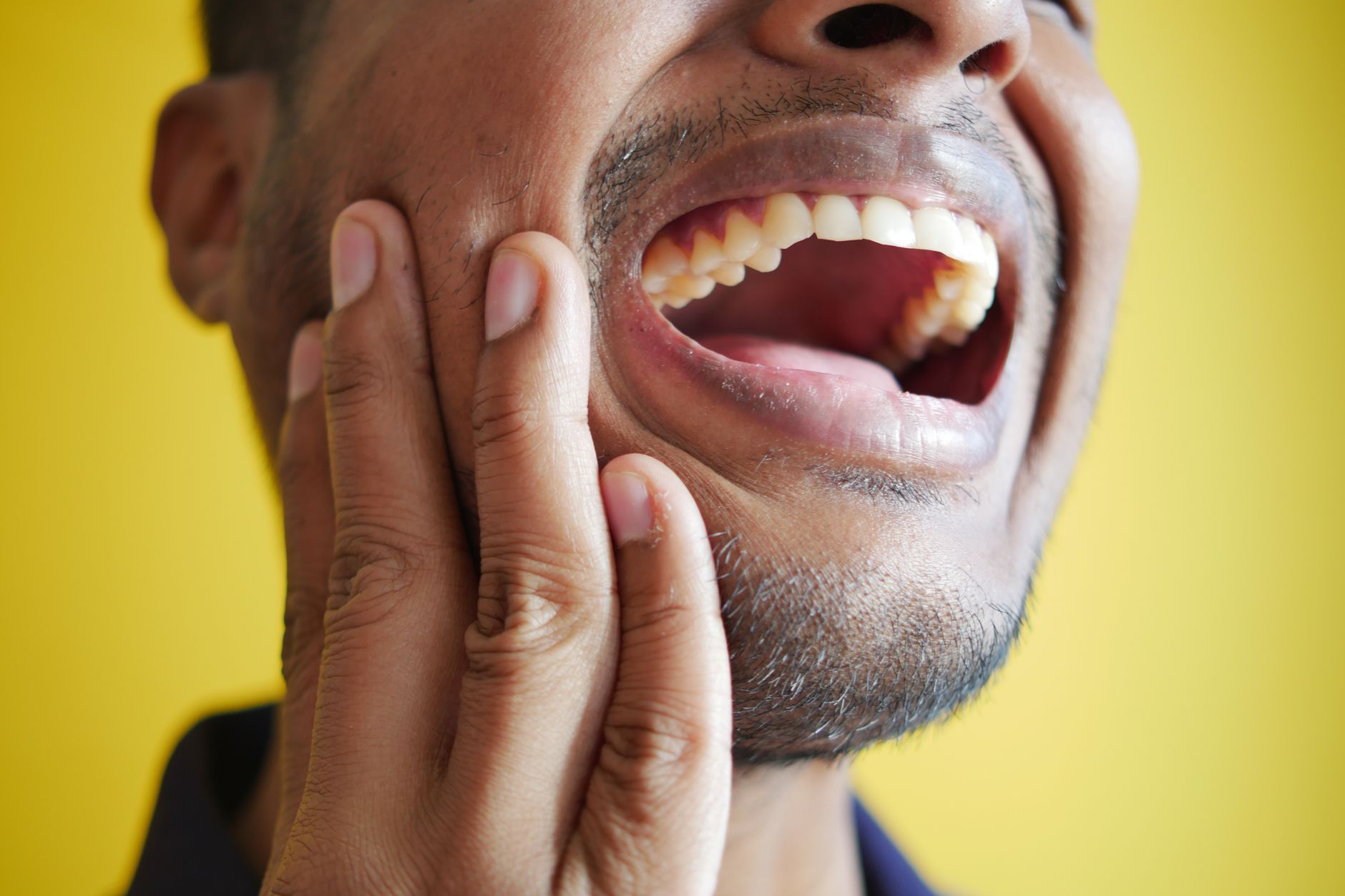
What TMJ mouthpieces promise
Temporomandibular joint disorder (TMD) affects the jaw joint and surrounding muscles, causing pain, clicking, and limited movement. A TMJ mouthpiece, also called an occlusal splint or night guard, is marketed as a noninvasive fix: wear it overnight, and the appliance will cushion your bite, relax your jaw muscles, and stop teeth grinding that aggravates the joint. Dentists prescribe custom-fitted versions for $300 to $800. Drugstores sell boil-and-bite guards for $20 to $40. Online retailers promise “professional-grade” results without the dental visit.
The pitch is simple. The evidence is not.
Temporomandibular disorders have multiple causes (muscle tension, disc displacement, arthritis, structural abnormalities), and a mouthpiece for TMJ pain addresses only one mechanism: changing how the upper and lower teeth meet. Marketing implies that correcting the bite reliably fixes the problem. The clinical trials tell a more complicated story about how TMJ mouthpieces work, who benefits, and what risks the product descriptions leave out.
The TMJ mouthpiece evidence shows a large placebo effect
A 2021 network meta-analysis asked the most direct question: when you control for placebo, how much therapeutic benefit does a TMJ mouthpiece actually deliver?4 The study pooled data from randomized trials that included sham-appliance control groups (patients wore a palatal-coverage device with no occlusal contact). The result: benefits from stabilization splints were partially or mostly attributable to the placebo effect, not just the mechanical intervention. Patients improved whether or not the appliance changed their bite.
The most recent Cochrane review (2024) on occlusal interventions for TMD reached a similar conclusion.1 Across 46 trials, the evidence for pain relief from occlusal splints was low to very low certainty. The review found that splints did not consistently outperform minimal-intervention controls, and when they did, the difference was often within the range of placebo response.
This does not mean mouthpieces do nothing. It means a large part of what they do is provide a ritual, a sense of control, and a nightly reminder to relax the jaw. For some patients, that is enough. For others, paying $500 for a placebo effect feels like a poor value.
Network meta-analysis shows that benefits from TMJ mouthpieces are partially or mostly attributable to placebo effect, not just the mechanical intervention. Patients improved whether or not the appliance changed their bite.
Short-term relief doesn’t predict long-term outcomes
A 2017 meta-analysis separated short-term (under 3 months) and long-term (6 months or more) outcomes for stabilization splints.3 In the short term, splints reduced pain and improved jaw function compared to no treatment. At 6 months and beyond, the benefit diminished or disappeared. The pooled data showed no significant long-term effect on pain intensity.
Why the disconnect? One explanation is that the novelty and attention associated with starting treatment produce a temporary improvement. Another is that TMD is often self-limiting (it resolves on its own), and the splint takes credit for natural recovery. A third is that the appliance does not address the underlying cause, so once the initial placebo boost wears off, symptoms return.
A 2026 systematic review on mandibular advancement devices (MADs) used for sleep apnea found a parallel pattern.10 Short-term trials reported minimal TMJ side effects. Long-term follow-up (2 years or more) showed increased rates of TMJ pain, joint sounds, and reduced range of motion. The appliance that helped breathing at night worsened the jaw joint over time. The same mechanism applies to any mouthpiece that holds the jaw in a fixed or advanced position: what feels helpful in month one can become a structural problem in year two.
Marketing for TMJ mouthpieces rarely mentions this timeline. The before-and-after testimonials stop at 8 weeks.
Custom versus over-the-counter: evidence challenges the premium
Dentists argue that a custom-fabricated splint, made from an impression of your teeth, fits better and delivers superior results compared to a one-size-fits-all drugstore guard. A 2024 meta-analysis tested that assumption directly.8 The study compared anterior repositioning splints (custom devices that move the jaw forward) to stabilization splints (custom devices that keep the jaw in a neutral position) and found no significant difference in pain reduction or functional improvement between the two designs.
The implication: the precision of the fit mattered less than the fact that patients wore something. A 2026 randomized trial compared fully digital workflows (CAD/CAM splint fabrication) to conventional impression-based methods for the Michigan appliance, a widely used stabilization splint.18 Both groups improved. The digital version was faster to produce and slightly more comfortable, but clinical outcomes (pain, jaw opening, clicking) were equivalent.
This does not mean over-the-counter guards are identical to custom splints. Fit, retention, and comfort differ. But the evidence suggests the therapeutic gap is smaller than the price gap. If a $30 boil-and-bite guard is uncomfortable or ineffective after 4 weeks, a $600 custom splint may not solve the underlying problem either.
How TMJ mouthpieces work (and when they don’t)
The proposed mechanisms for how a mouthpiece for TMJ pain might help include:
- Reducing muscle hyperactivity. A splint creates a smooth, even contact surface that may decrease clenching force or change muscle firing patterns.7
- Altering joint loading. By slightly opening the bite or repositioning the jaw, the appliance changes pressure distribution on the joint disc and condyle.9
- Preventing parafunctional habits. The physical presence of the appliance serves as a tactile reminder not to grind or clench.
A 2025 systematic review on anatomical changes after stabilization splint therapy found mixed results.9 Some imaging studies showed increased joint space or reduced disc displacement after months of splint use. Others found no structural change despite symptom improvement. The review concluded that the biomechanical explanation for splint efficacy remains uncertain.
What is clearer is when splints fail. A 2026 cohort study found that patients with pre-existing subchondral bone alterations (detected on MRI) had significantly worse functional outcomes from stabilization appliance therapy.11 For these patients, the appliance did not reverse the structural damage, and in some cases, symptoms worsened. A 2025 meta-analysis on TMD interventions for headache disorders found that splint efficacy varied widely depending on the underlying TMD subtype.13 Myofascial pain responded better than disc displacement or degenerative joint disease.
The marketing says, “TMJ mouthpieces work.” The evidence says, “They work for some presentations, in some patients, for a limited time.”
Multimodal treatment outperforms mouthpieces alone
A 2026 Bayesian network meta-analysis ranked different interventions for TMD myofascial pain syndrome across 37 randomized trials.2 The top-performing treatments were not single interventions. They were combinations: occlusal splints plus physical therapy, behavioral modification plus dry needling, manual therapy plus patient education. Splints alone ranked in the middle of the pack, outperforming no treatment but underperforming multimodal approaches.
Two pilot randomized trials tested this directly. In one, patients with myogenous TMD received either an occlusal splint plus physical therapy or physical therapy alone.15 The combined group showed greater pain reduction at 6 weeks. In the other, patients received a stabilization splint plus low-level laser therapy or a splint alone.16 The multimodal group had better outcomes on pain, jaw opening, and quality-of-life measures.
The comparison that challenges the mouthpiece-first approach most directly comes from a 2026 trial that pitted psycho-behavioral-relaxation therapy against occlusal splint therapy for myalgia.14 Both groups improved. The behavioral group showed equal or better pain reduction without the cost or potential long-term risks of an appliance. A 2022 Cochrane review on psychological therapies for TMD found moderate-certainty evidence that cognitive-behavioral therapy reduces pain and improves function.17
The implication: a TMJ mouthpiece is not a standalone solution. It is one tool in a treatment plan that should also address muscle tension, stress, posture, and parafunctional habits. Sold alone, it treats the symptom (abnormal bite contact) without addressing the cause (why you are clenching in the first place).
| Approach | Evidence Quality | Placebo-Adjusted Benefit | Timeline | Cost Range | Long-Term Risk Profile |
|---|---|---|---|---|---|
| Custom stabilization splint | Moderate (Cochrane reviews, multiple RCTs) | Small to modest, largely placebo-mediated | Short-term relief (under 3 months), diminishes at 6+ months | $300 to $800 | Low to moderate (potential bone changes, dependency) |
| Custom repositioning splint | Moderate (systematic reviews, meta-analyses) | Similar to stabilization splint, no clear superiority | Variable, inconsistent long-term data | $400 to $900 | Moderate (can alter bite permanently, worsen TMJ in some cases) |
| Over-the-counter guard | Low (few head-to-head trials vs custom) | Likely similar to custom for short-term comfort | Variable fit and retention limit long-term use | $20 to $60 | Low (easily discontinued, minimal irreversible effects) |
| Behavioral therapy (CBT, relaxation) | Moderate (Cochrane review, RCTs) | Equal or superior to splint alone for myofascial pain | Benefits maintained at 6 months in trials | $100 to $300 per session, 6 to 12 sessions typical | Very low (no device dependency, teaches self-management) |
| Multimodal (splint + PT + behavioral) | High (network meta-analysis ranks it top-tier) | Largest effect sizes across multiple outcomes | Sustained improvement at 3 to 6 months in pilot trials | $600 to $2,000 total | Low (addresses multiple causes, reduces reliance on device alone) |
TMJ treatment approaches compared on evidence quality, benefit, cost, and long-term risk.
Who benefits and who should skip
The evidence suggests that a mouthpiece for TMJ pain is most likely to help if:
- Your primary symptom is nocturnal clenching or grinding (bruxism) that you cannot control behaviorally. The appliance protects teeth from wear and may reduce morning jaw soreness.
- You have myofascial pain (muscle-based TMD) without significant structural joint damage. Splints show modest short-term benefit in this subgroup.7
- You are willing to combine the splint with other interventions (physical therapy, stress management, jaw exercises). Multimodal treatment consistently outperforms splint-only approaches.2
Skip or use caution if:
- You already have an anti-snoring mandibular advancement device. A 2026 systematic review found that long-term MAD use for sleep apnea increases the risk of TMJ pain and joint changes.10 A 2020 randomized trial comparing oral appliances to CPAP for sleep apnea found higher rates of TMJ side effects in the appliance group.12 Adding a TMJ splint on top of an MAD does not fix the problem; it adds another device.
- Imaging shows subchondral bone alterations or advanced degenerative joint disease. A 2026 cohort study found that splint therapy performs poorly in these patients, and outcomes can worsen.11
- You expect a cure. The evidence supports short-term symptom management, not structural repair. A splint is a palliative tool, not a definitive treatment.
- You have not tried behavioral or physical therapy. A 2026 RCT found that psycho-behavioral-relaxation therapy matched or exceeded splint therapy for myalgia.14 Start with the lower-risk intervention.
The most honest summary of the TMJ mouthpiece literature is this: they help some people, in some situations, for a limited time, and much of the benefit is not specific to the appliance. That is not the message in the marketing, but it is what the trials show.
If you decide to try a mouthpiece for TMJ pain, track whether it works within 4 to 6 weeks. If pain or function has not improved by then, continuing to wear it for months is unlikely to change the outcome. Ask your dentist whether your TMD subtype (myofascial, disc displacement, or degenerative) matches the evidence for splint benefit. And consider whether adding physical therapy, stress reduction, or behavioral modification would address the underlying cause more directly than an appliance alone.
Sources
- Singh BP, et al. Occlusal interventions for managing temporomandibular disorders. Cochrane Database Syst Rev, 2024. PubMed
- Ma F, et al. Comparison and ranking of interventions for temporomandibular disorders-myofascial pain syndrome: a Bayesian network meta-analysis based on randomized controlled trials. BMC Oral Health, 2026. PubMed
- Kuzmanovic Pficer J, et al. Occlusal stabilization splint for patients with temporomandibular disorders: Meta-analysis of short and long term effects. PLoS One, 2017. PubMed
- Alkhutari AS, et al. Is the therapeutic effect of occlusal stabilization appliances more than just placebo effect in the management of painful temporomandibular disorders? A network meta-analysis of randomized clinical trials. J Prosthet Dent, 2021. PubMed
- Neeli A, et al. Comparison of occlusal splint with other treatment modalities in management of internal derangement of temporomandibular joint: A systematic review. Oral Maxillofac Surg, 2025. PubMed
- Wang L, et al. The efficacy of anterior repositioning splints in the management of temporomandibular disc displacement: a systematic review and meta-analysis. BMC Oral Health, 2025. PubMed
- Boulatar Y, et al. Effectiveness of the occlusal stabilization splint in the treatment of myogenous temporomandibular disorders: A systematic review. Dent Med Probl, 2026. PubMed
- Maheshwari K, et al. Effectiveness of anterior repositioning splint versus other occlusal splints in the management of temporomandibular joint disc displacement with reduction: A meta-analysis. J Indian Prosthodont Soc, 2024. PubMed
- Porntirit R, et al. Anatomical Changes After Stabilisation Splint Therapy: A Systematic Review and Meta-analysis. Int Dent J, 2025. PubMed
- Liu S, et al. Short- and long-term effects of mandibular advancement device therapy for obstructive sleep apnea on temporomandibular disorders: A systematic review and meta-analysis. J Prosthodont Res, 2026. PubMed
- Emshoff R, et al. Subchondral bone alterations in temporomandibulat joint arthralgia negatively affect the functional results of stabilization appliance therapy. A retrospective exploratory cohort study. Sci Rep, 2026. PubMed
- Nikolopoulou M, et al. Oral appliance therapy versus nasal continuous positive airway pressure in obstructive sleep apnea: A randomized, placebo-controlled trial on temporomandibular side-effects. Clin Exp Dent Res, 2020. PubMed
- Demont A, et al. Efficacy of Conservative Interventions Targeting Temporomandibular Disorders for Adults With Headache Disorders: A Systematic Review and Meta-Analysis. J Oral Rehabil, 2025. PubMed
- Sójka-Makowska A, et al. Comparison of the effectiveness of psycho-behavioral-relaxation and occlusal splint therapy in the treatment of myalgia. Dent Med Probl, 2026. PubMed
- Ferrillo M, et al. Effects of occlusal splint therapy in addition to physical therapy on pain in patients affected by myogenous temporomandibular disorders: A pilot randomized controlled trial. Cranio, 2026. PubMed
- Afshari Z, et al. The Effectiveness of Multimodality Treatment Including Stabilization Splint and Low-Level Laser Therapies on Managing Temporomandibular Disorders: A Pilot Randomized Controlled Trial. Clin Exp Dent Res, 2025. PubMed
- Penlington C, et al. Psychological therapies for temporomandibular disorders (TMDs). Cochrane Database Syst Rev, 2022. PubMed
- Shabaan AA, et al. Fully digital workflow versus conventional methods for fabricating the Michigan appliance in patients with temporomandibular joint disorder. A randomized controlled clinical trial. BMC Oral Health, 2026. PubMed